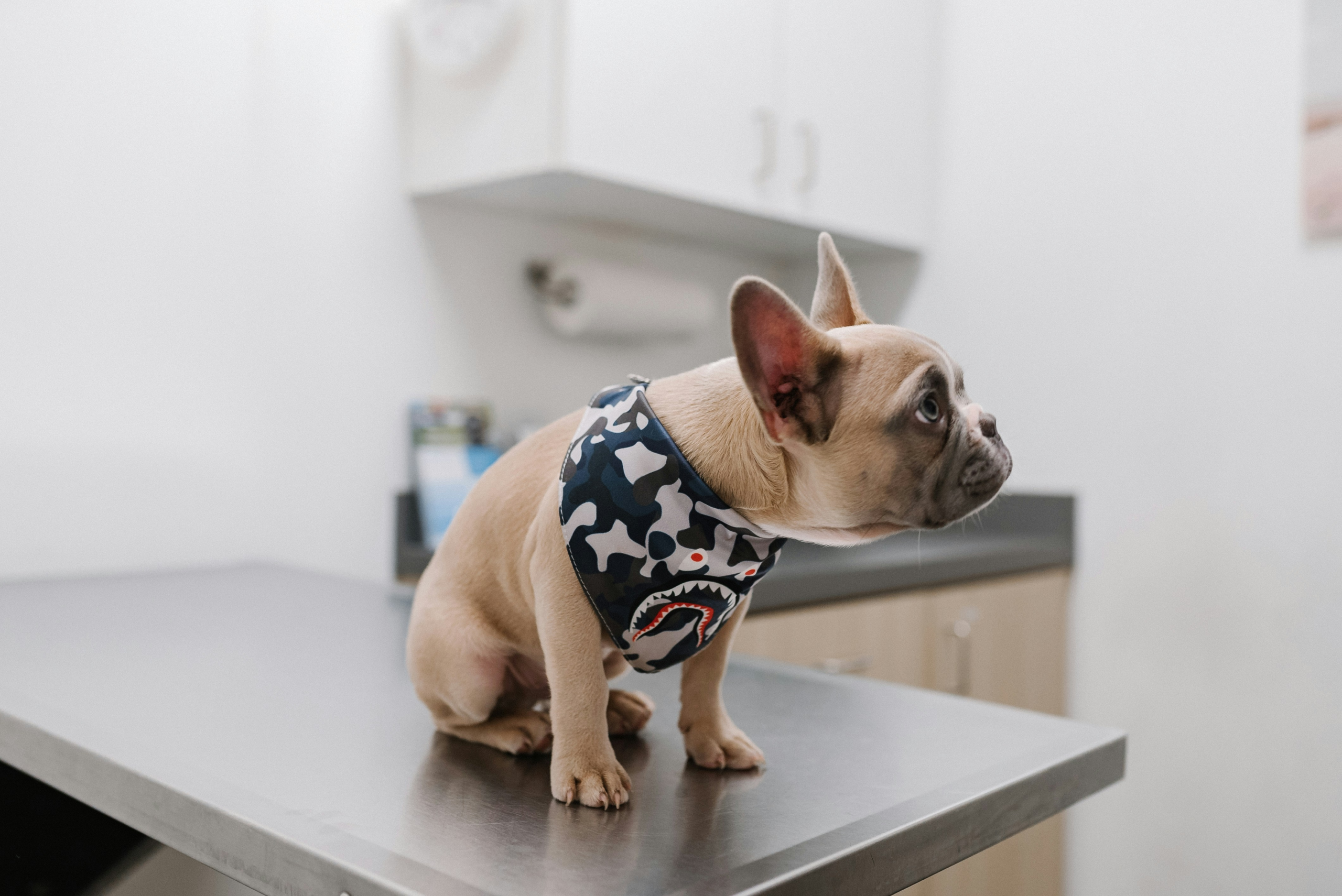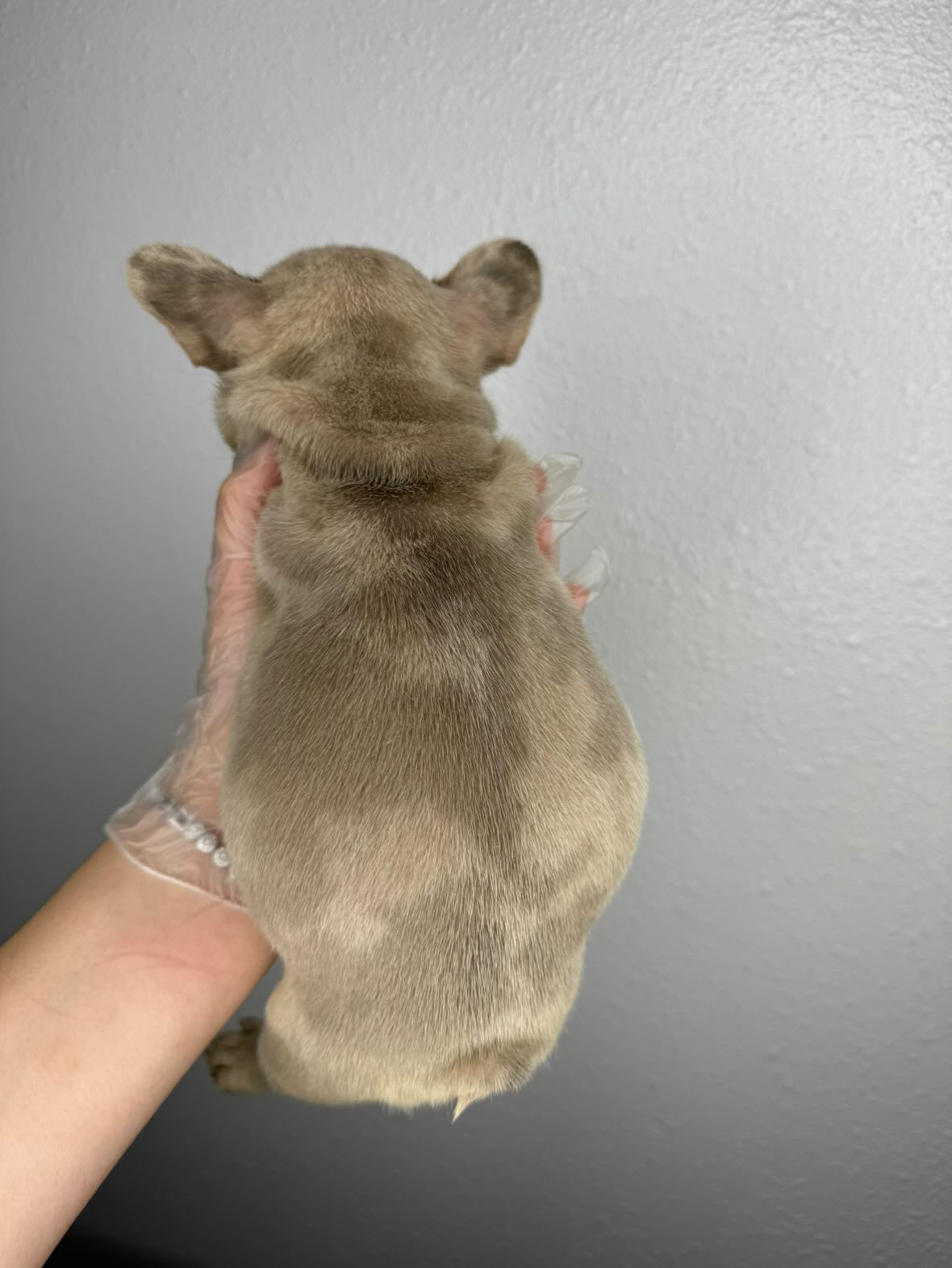
When we got Electra, we knew she came from a merle litter.
That was pretty much the extent of my knowledge at the time.
We were told she would likely be a merle French Bulldog, but honestly, I didn’t care what color she was. We wanted a female, and Electra was the only girl in the litter.
So our selection process was basically:
We’ll take that one.
I had already done some Googling about French Bulldog colors after we were told Zeus was an Isabella French Bulldog, so naturally I started looking into merle Frenchies too.
And based on Electra’s puppy pictures, merle seemed to make perfect sense.
She looked really spotted.
She had adorable black markings across her face and ears, along with beautiful blue eyes. It was harder to tell from the pictures how many markings she had across the rest of her body, but there was no question that her little face was covered in them.
Then Electra came home.
And she was perfect.
What Does Merle Mean in Dogs?
Before Electra, “merle” was basically just another dog-color word to me.
Merle is actually a coat pattern rather than simply a color. The UC Davis Veterinary Genetics Laboratory describes merle as a pattern with irregular areas of diluted pigment mixed with areas of fully pigmented color. The pattern is associated with a genetic variant involving the PMEL gene, and the way merle appears can vary considerably from one dog to another.
In other words, not every merle dog is going to look the same.
I certainly didn’t realize just how different they could look until Electra grew up.
Electra’s Spots Started Disappearing
As Electra got older, something funny happened.


Her dramatic puppy markings became less and less obvious.
By the time she was around a year old, if you didn’t know her history, I don’t think you would necessarily look at her and immediately think, That’s a merle French Bulldog.
To me, she started looking much more like a regular fawn-colored Frenchie.
Her body didn’t have those obvious contrasting patches I associated with merle, and even the overall impression of her coloring seemed completely different from those early puppy pictures.
Not that it mattered.
We didn’t choose Electra because she was merle in the first place, and whether she had ten spots or zero spots wasn’t going to change anything.
But I was curious.
Where did my spotted puppy go?
Then Someone Else Noticed Her Markings
One day, our dog trainer pointed out something I hadn’t really noticed.
Electra does have subtle lighter markings across her body.
They’re just incredibly hard to see.
When the light hits her coat—especially out in the sun—you can sometimes see those faint variations in color. Once they’re pointed out, they’re there. But inside the house or under normal lighting?
You could easily miss them.
Eventually, our veterinarian also commented on Electra’s coloring and said she thought Electra might be a cryptic merle.
Suddenly I had another dog-color term to Google.
What Is a Cryptic Merle?
This is where dog coat genetics gets much more complicated than “spotted dog equals merle.”
According to UC Davis Veterinary Genetics Laboratory, dogs described as cryptic merles—sometimes also called phantom or ghost merles—typically display little or no visible merle pattern. Some can even be mistaken for non-merle dogs. The genetics behind merle involve variations in a DNA insertion associated with the PMEL gene, and those variations can influence how strongly the pattern is expressed.
That description certainly sounds familiar when I look at adult Electra.
But there’s an important distinction here:
We don’t actually know Electra’s merle genotype.
Our vet said she might be cryptic merle and told us genetic testing was available if we wanted to know more definitively.
We decided not to do it.
Electra isn’t going to be bred, and knowing exactly which coat-color variant she carries wouldn’t change how we care for her. For us, satisfying our curiosity wasn’t enough reason to pursue testing.
So when I call Electra our “hidden merle,” I’m describing what we see and what our veterinarian suggested—not claiming that genetic testing has confirmed it.
Can You Tell a Merle Dog Just by Looking at Them?
Electra has convinced me that the answer isn’t always as simple as I once thought.
UC Davis specifically notes that some dogs carrying merle variants can show little to no visible merle pattern. That’s one reason DNA testing can be useful when knowing a dog’s actual merle status matters, particularly when breeding decisions are involved.
Electra is a great example of why I wouldn’t try to determine another dog’s genetics from a photograph.
I have pictures of her as a puppy where her markings seem obvious.
Then I can look at adult Electra standing in my living room and think:
Merle? Where?
Take her outside into the sunlight, though, and those faint markings become SLIGHTLY easier to spot, but not obvious.
Dog genetics are weird.
What About Health Problems in Merle French Bulldogs?
This is probably the part I’ve been asked about the most.
People have asked whether we’re worried about Electra’s health because she’s a merle.
There are legitimate health concerns associated with certain merle genetics, but it’s important not to lump every merle dog into the same category.
One of the major concerns involves breeding two dogs carrying merle variants. This can produce what’s commonly called a double merle. UC Davis notes that double-merle dogs can be prone to auditory and ophthalmologic problems as well as other abnormalities, which is one reason understanding merle genetics is particularly important for breeders.
That researched information is separate from our experience with Electra.
I can only tell you what our particular dog has been like.
Aside from her itchy skin, Electra has actually been our more robust Frenchie. She’s had relatively few issues compared with some of the things we’ve dealt with as French Bulldog owners.
That doesn’t prove merle French Bulldogs don’t have increased risks, just as another merle dog’s health problems wouldn’t prove Electra will develop them.
It’s simply Electra’s story so far.
Merle Isn’t a Standard French Bulldog Color
One other thing worth knowing is that merle isn’t an accepted color or pattern under the French Bulldog breed standard.
The French Bull Dog Club of America breed standard recognizes white, cream and shades of fawn, along with specified markings and patterns. Merle is specifically listed among the disqualifying colors and patterns.
That wasn’t particularly important to us when choosing Electra.
We weren’t looking for a show dog.
We weren’t planning to breed her.
We wanted our girl.
And that’s exactly what we got.
Our Not-So-Merle-Looking Merle Frenchie
Looking back at Electra’s puppy pictures now makes me laugh a little.
There was this tiny spotted puppy with black markings, blue eyes and a face that screamed, Look at me!
And now?
Most people probably wouldn’t notice anything unusual about her coloring unless they knew what to look for—or happened to catch her standing in exactly the right sunlight.
Maybe Electra is a cryptic merle, like our veterinarian suggested.
Maybe genetic testing would give us a more precise answer.
For now, we’re okay not knowing.
Whether she’s merle, cryptic merle, hidden merle, or simply Electra with some sneaky little spots, she’s still the same dog we wanted from the beginning.
We didn’t pick her for her coloring.
We picked her because she was our girl.
And honestly, that’s still my favorite thing about her.
Of course, Electra isn’t the only Frenchie in our house with interesting coloring! Zeus has his own unique look, too. If you’re curious about his coat, check out my post about Zeus’s Isabella French Bulldog coloring and what makes it so special.